
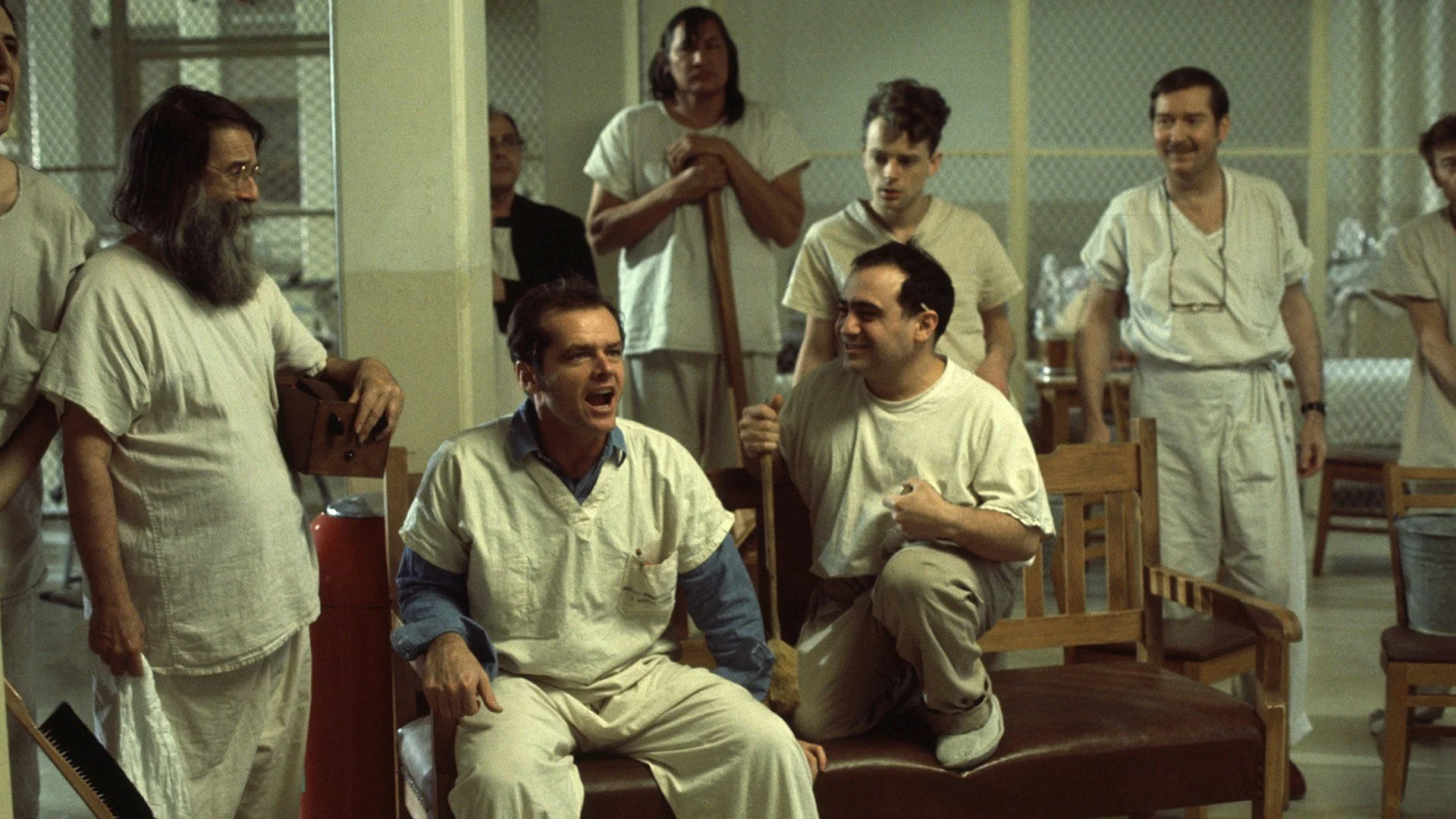
September 25, 2026
ONE OF ONLY 3 FILMS in the history of the Academy Awards to win all of the big 5 awards: Best Picture, Best Actor, Best Actress, Best Director, and Best Screenplay.
Number 19 on IMDb’s top 250 greatest films of all time.
Join us for a film almost everyone loves, and almost no one remembers correctly. It plays like a comedy about a revolt, but may actually be a story about a defeat. Fifty years later, this film still shapes how Americans picture a psychiatric ward. So come argue with us about whether it told the truth, and about the question underneath it: Who gets to decide that a person has lost their mind?
The film will be followed by a panel discussion and Q & A. This will be a public event in conjunction with The Alamo.
Below are 6 things to sit with before attending our next Long Take film series:
1) Read Roger Ebert’s review of the movie
One of the great critics, declining to let the beloved film off easy.
2) Watch this Next to Normal clip: “Didn’t I see this movie”
By referencing the movie, a woman sings her protest of receiving ECT (Electroconvulsive Therapy) for her worsening bipolar disorder.
3) Explore “The Library of Dust”: Read this Marginalian article and explore his website
Library of Dust, a project by visual artist David Maisel, focuses on copper canisters containing cremated remains of psychiatric patients from the Oregon State Hospital. The human ash and copper have reacted chemically, causing colorful mineral blooms on the surface of the cans.
4) Listen to this fascinating NPR story, “‘My Lobotomy': Howard Dully's Journey”
Dully spent two years tracking down the story of the transorbital lobotomy he was given at twelve, performed by Walter Freeman, who traveled by van to psychiatric hospitals across the country and lobotomized more than 2,500 people.
5) Watch “Louise Fletcher Wins Best Actress: 48th Oscars (1976)”
"It looks like you all hated me so much that you've given me this award for it.”
6) Watch “Ken Kesey - The Inspiration For One Flew Over the Cuckoo's Nest”
The author of the original 1962 book, that the movie is based on, discusses his influences and writing process.
June 24, 2026
During the Great Depression, life felt grey and individuals felt powerless. Pulp fiction magazines came along as an escape from these harsh realities of existence. The narratives were in no way trying to be respectable, their content was that of our base human impulses. They were lurid, sensational, fast, and disposable; impossible to ignore and extremely democratic, everyone could afford them, everyone could read them. But these crime stories and detective tales, sometimes with even supernatural elements, grew to become beloved; and this unpretentious entertainment ended up shaping genres as we know them today. 50 years later, along comes Tarantino, borrowing the low form to create high art; showing a more modern generation how pulp fiction can be made with the precision of true literature. This film is a redemption story wrapped in heroin overdoses and gimp suits. Tarantino’s invitation is that maybe one does not have to choose between the profound and the profane.
The film will be followed by a panel discussion and Q & A. This will be a public event in conjunction with The Alamo.
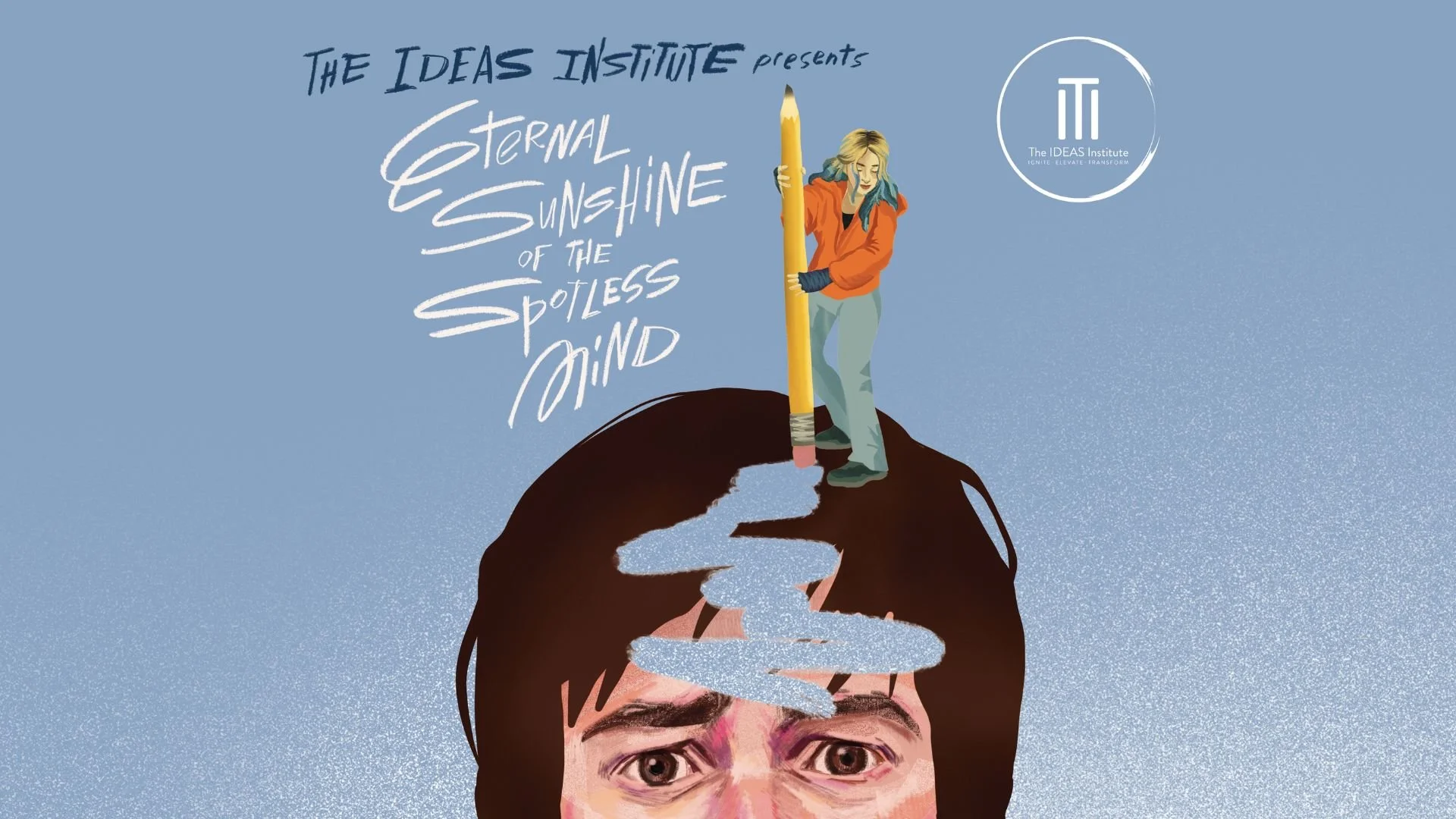
March 27, 2026
The film's title comes from Alexander Pope's 1717 poem "Eloisa to Abelard,” about forbidden love, memory, and the desire to forget pain:
"How happy is the blameless vestal's lot!
The world forgetting, by the world forgot.
Eternal sunshine of the spotless mind!
Each pray'r accepted, and each wish resign'd."
The poem promises peace through erasure. The film asks: what if you could actually have that? And would you want it once you did?
The desire to erase emotional pain VS. the necessity of remembering to find meaning.
The film will be followed by a panel discussion and Q & A. This will be a public event in conjunction with The Alamo.

October 24, 2025
The IDEAS Institute is proud to present the first movie in our Film Series, The Exorcist, with a live Q&A with KMOX’s Dave Glover and IDEAS Institute film guru, Jeremy Casper.
Inspired by exorcisms performed in Saint Louis, The Exorcist is cosmic horror on local soil and colors the mythology of our city. And beyond its horrific content, the film is an invitation into deeper processes and conversations. How does horror reveal truth? How do stories shape belief? What psychological needs does the concept of evil fulfill?
IDEAS INSTITUTE FILM SERIES
This series creates cross-pollination between media, culture, art, academia, and spirituality while inviting diverse perspectives to engage in intellectual conversation. We seek to create community around shared vulnerability through a familiar access point: watching a movie together. Through this series, we seek to beautify the psyche of St. Louis by experiencing powerful art together and then collectively engage in interpretation versus passive consumption.